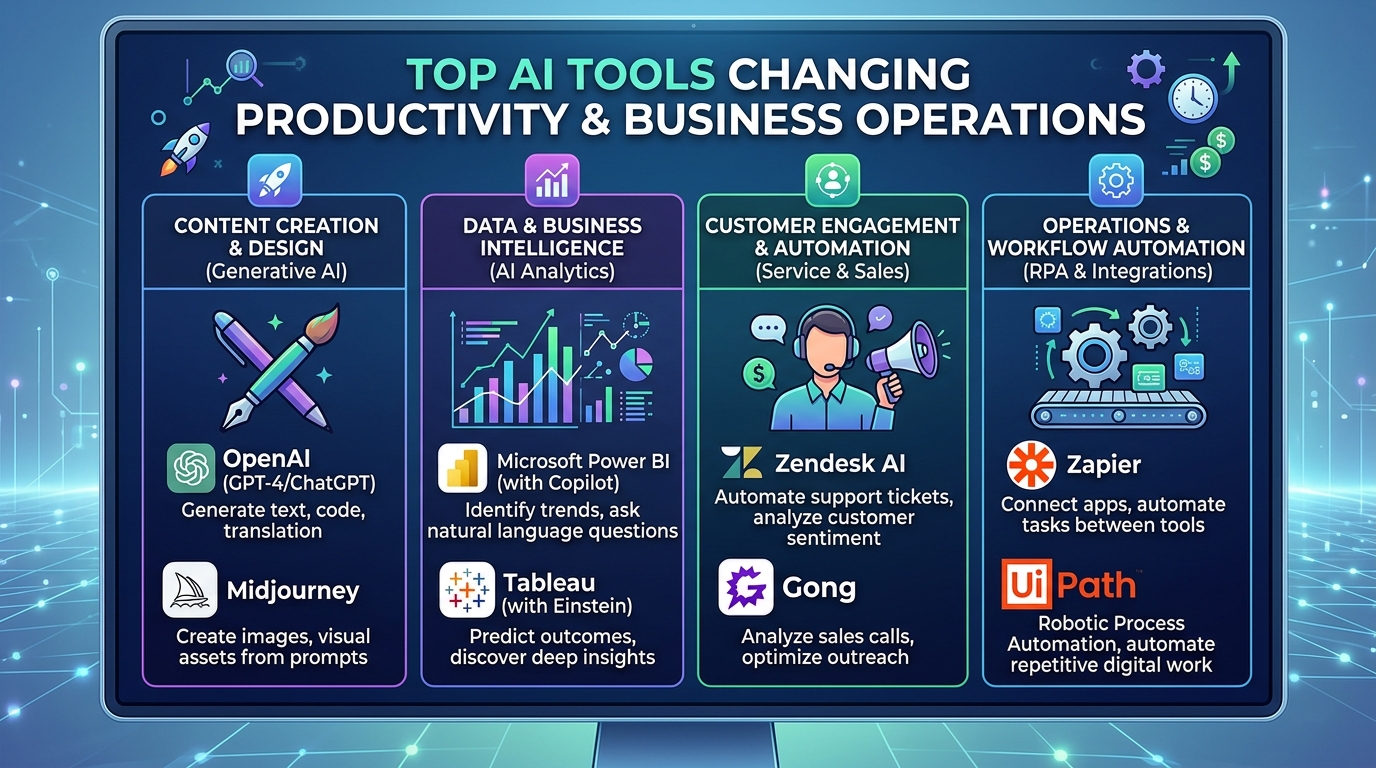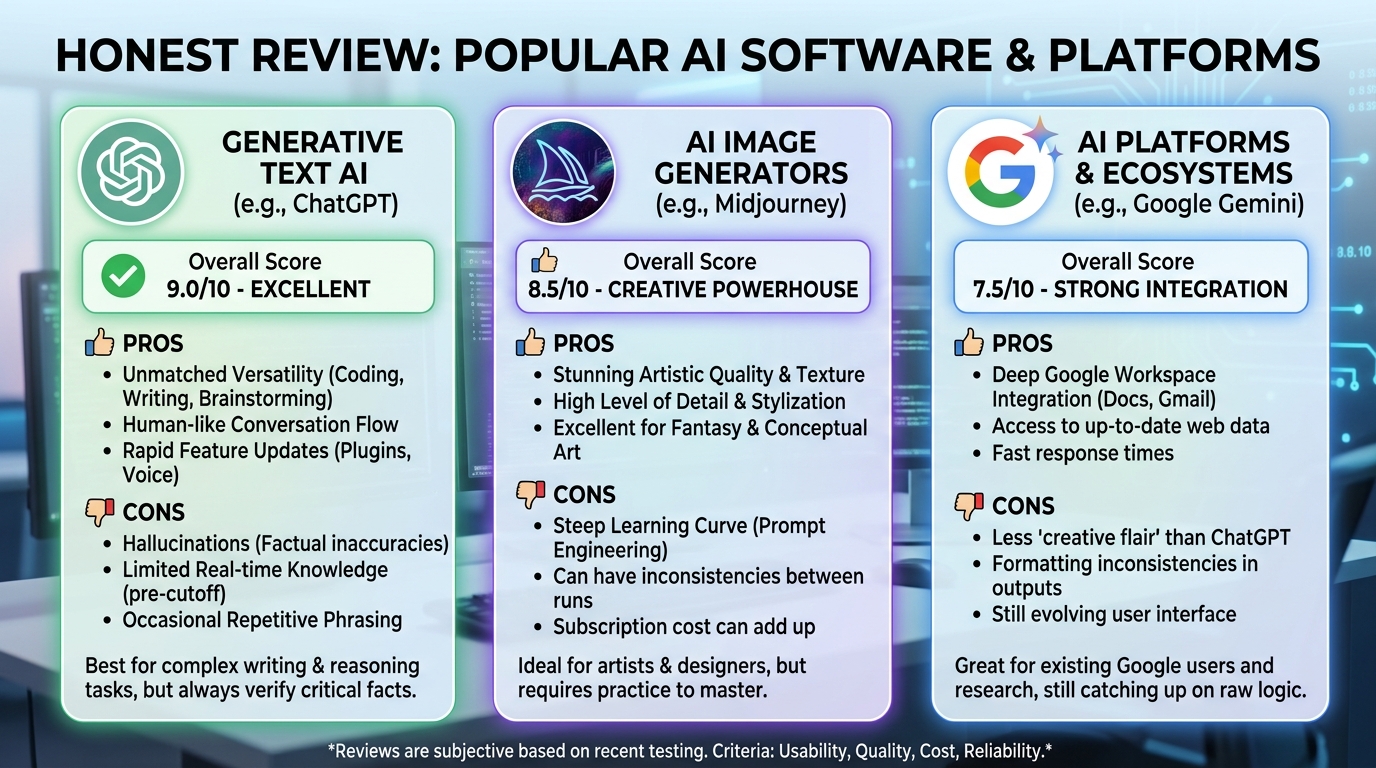

Artificial Intelligence software and platforms have become extremely popular in 2026, offering powerful tools for automation, content creation, data analysis, and productivity enhancement. With so many AI solutions available, users often find it difficult to determine which platforms are genuinely useful and which are overhyped. A clear and honest review helps in understanding their real value.
This article provides a balanced overview of popular AI software and platforms, focusing on usability, performance, strengths, and limitations in real-world usage.
Usability and Ease of Access
Most modern AI platforms are designed with user-friendly interfaces that make them accessible even for beginners. These tools often include simple dashboards, guided features, and automated workflows that reduce the learning curve.
However, some advanced AI platforms may still require basic understanding of technical concepts. While they offer powerful capabilities, users may need time to fully explore and utilize all available features.
Performance and Practical Applications
AI software is widely used for tasks such as writing assistance, data analysis, image generation, and workflow automation. In real-world usage, many platforms deliver fast and accurate results, improving overall productivity.
Performance can vary depending on the complexity of the task and the quality of input data. High-quality AI tools generally provide more reliable outputs and better consistency in results.
Strengths of Popular AI Platforms
One of the main strengths of AI platforms is their ability to automate repetitive tasks. This saves time and allows users to focus on more important and creative work. AI tools also help improve decision-making by analyzing large amounts of data quickly.
Another strength is versatility. Many AI platforms offer multiple features within a single system, making them useful for different types of users including students, professionals, and businesses.
Limitations and Real-World Challenges
Despite their advantages, AI platforms also have limitations. One common issue is dependence on data quality. If the input data is poor or incomplete, the output may not be accurate or reliable.
Another limitation is cost. Some advanced AI tools require paid subscriptions, which may not be affordable for all users. Additionally, occasional errors in automated outputs can still occur, requiring human review.
Future of AI Software Development
AI platforms are expected to become even more advanced in the future. Developers are focusing on improving accuracy, speed, and personalization features. This will make AI tools more efficient and easier to use.
Future developments are also likely to improve integration with other digital systems. This will allow smoother workflows and more intelligent automation across different industries.
FAQ’s
What is AI software used for
AI software is used for automation, data analysis, content creation, and improving productivity.
Are AI platforms easy to use
Yes, most modern AI platforms are designed to be user-friendly, but some advanced tools may require learning.
Do AI tools always give accurate results
Not always, as accuracy depends on data quality and system limitations.
Are AI platforms free or paid
Some are free, but advanced features are usually available in paid versions.
Will AI software improve in the future
Yes, AI software is continuously evolving and becoming more advanced.
Conclusion
Popular AI software and platforms offer powerful tools that improve productivity, automation, and digital efficiency. While they have some limitations, their benefits make them highly valuable in 2026. As technology continues to evolve, AI platforms are expected to become even more accurate, accessible, and integrated into everyday digital life.