The Tool Everyone Has and Nobody Uses the Same Way Twice
Two writers can open the same AI assistant and produce opposite results: one ships a month of strong content in a week, the other generates a swamp of fluent, forgettable paragraphs and concludes the technology is overrated. The difference is rarely the tool — it is the division of labour. AI writing assistants are genuinely excellent at some parts of writing and quietly terrible at others, and the professionals getting value from them have learned exactly where the border runs. This comparison maps that border by task — drafting, structure, editing, research, and voice — so you can assign each job to the worker, human or machine, that actually does it best.
Where AI Wins: Speed Work and Structure
The machine’s strengths are real and worth stating plainly. First drafts of routine content: product descriptions, meeting summaries, standard emails, and documentation scaffolding emerge in seconds at a quality that needs editing rather than rescue. Outlining and restructuring: given a pile of notes, an assistant reliably proposes sensible structures, headings, and orderings — the organisational labour writers procrastinate on. Variation generation: twenty headline options, five tones of the same announcement, subject lines by the dozen — breadth on demand, from which a human picks the two worth keeping. Compression and expansion: turning a report into an executive summary or meeting notes into a full brief is mechanical transformation, and machines are superb mechanics. Used this way, the assistant is not a ghostwriter; it is the world’s fastest junior colleague, and the time it returns — hours per week for heavy writers — is the honest core of the AI productivity claim.
Where AI Loses: Facts, Judgement, and Voice
The weaknesses are equally consistent. Facts: assistants produce confident, fluent, occasionally invented claims — statistics without sources, quotations nobody said, dates that feel right. Anything factual that leaves the building needs human verification, full stop; the tool’s confidence is a style, not a signal. Judgement: the assistant cannot know what matters — which detail leads the story, which argument your audience will resist, which sentence will offend a client — because judgement is knowledge of a specific world, and the model knows the average of all worlds. Voice: left unsteered, AI prose regresses to a competent mean — smooth, balanced, and recognisably generic within three paragraphs. Distinctive writing, the kind readers follow a byline for, comes from a human’s choices, scars, and opinions; the assistant can imitate a voice you feed it, but it cannot have one. And original experience — the interview, the test you ran, the failure you learned from — cannot be generated at all. It can only be reported, by the person who lived it.
The Workflow That Gets the Best of Both
The professionals’ pattern is stable enough to copy. The human starts: angle, audience, and the one thing the piece must achieve — plus any real material: data, quotes, experience, examples. The assistant builds: outline options, a workable first draft of the routine sections, headline and structure variants. The human finishes: verifying every fact, rewriting in their own voice, cutting the generic third that always sneaks in, and adding the specifics only they know. Writers describe the time split honestly — the machine contributes perhaps sixty per cent of the keystrokes and twenty per cent of the value, which is exactly the right trade: it absorbs the typing so the human can spend their hours on the thinking. The same discipline applies to the rest of your digital toolkit, where the rule is identical: let software carry the repetitive load, keep human judgement on the irreversible decisions — the principle behind using a password manager for credentials while keeping your own recovery plan firmly human.
Choosing and Using a Tool
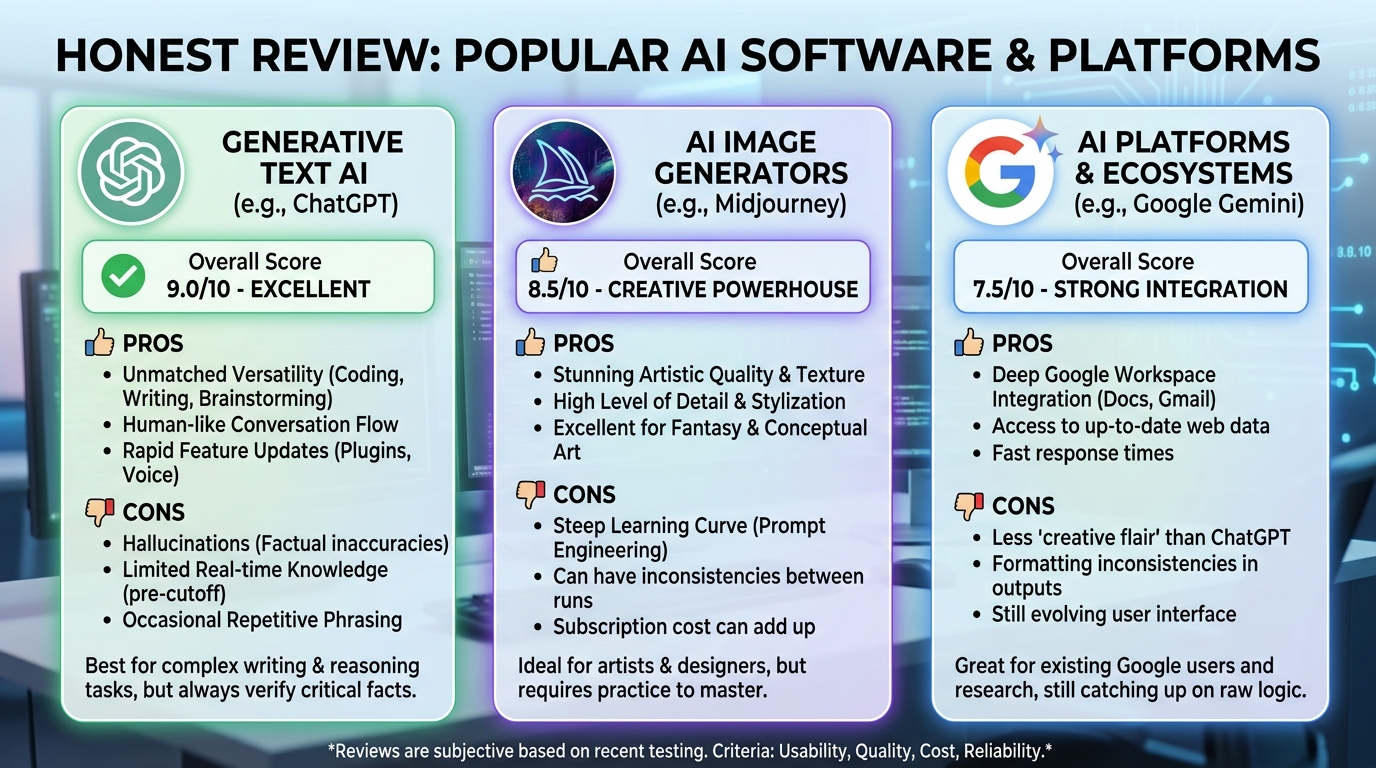
Between the major assistants, differences in raw writing quality are smaller than differences in fit: integration with your documents and email, the interface your team will actually open, privacy terms your organisation can accept, and price per seat at your scale. Test with your real work — give two finalists the same messy brief from last month and compare what returns. Then institutionalise the border: a one-page house rule — AI for drafts, structure, and variants; humans for facts, final voice, and anything with a name or a number in it — prevents both the swamp and the scandal. The writers thriving with these tools are not the ones who delegated writing. They are the ones who finally got to spend their day on the parts of it that were always the point.
A Note on Detection and Disclosure
Two professional obligations complete the picture. First, detection: readers and search engines alike are getting better at sensing unedited AI prose, and the tell is not any single phrase — it is the absence of anything only a human could know. A specific number from your own test, a named example, a sentence that could only come from your experience: these are not decoration, they are the proof of work. Second, disclosure: policies differ by publisher and platform, but the defensible default is transparency proportional to involvement — no disclosure needed for grammar and outline help, clear acknowledgement where AI drafted substantial text, and never, under any policy, AI presented as eyewitness reporting. Teams that write these rules down before the first deadline argument are the ones still using the tools happily a year later.
The Bottom Line
AI writing assistants compared honestly: unbeatable at speed work, structure, and variations; unreliable on facts; incapable of judgement, voice, and experience. Assign accordingly — machine as the tireless junior, human as the accountable author — and the tools deliver their real promise. Not writing without writers, but writers without the blank page.