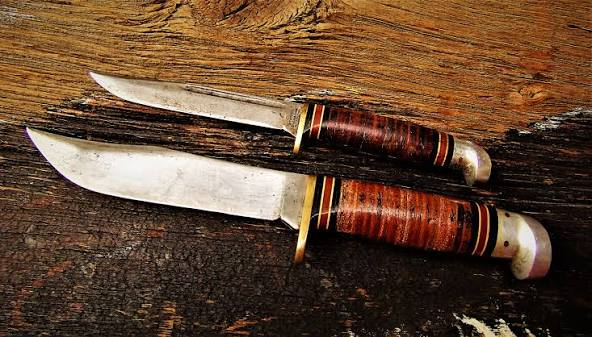

Western knives have a strange pull on people. They are plain steel, wood, and leather, yet one can steal the attention of a whole room. The same goes for the belt knives that ride on a rider’s hip and the ranch knives that spend their days in dust and mud. All three share a history of tools that had to earn their place.
The Roots of Western Knives
Made for People Far From Town
Early riders, cowhands, and settlers could not walk into a store when a blade failed. Their knives had to be tough, repairable, and honest. One knife might cut rope at dawn, skin game at noon, and slice supper by dusk. Western knives grew out of that pressure, and the style has changed very little because the original idea was already right.
Shapes That Tell a Story
Clip points, drop points, and spear points all show up in this tradition. A clip point offers a fine tip for detail work. A drop point gives a strong, steady spine for harder jobs. A spear point is balanced and symmetrical, ready for almost anything. Looking at a blade is like reading a short history of the people who used it.
Materials With Character
Handles That Feel Alive
Stag, bone, walnut, and horn are common handle choices. Unlike plastic, these materials age. They darken, smooth out, and slowly take the shape of your hand. After a few years, the handle feels like it grew to fit you.
Bolsters and Small Details
Brass or nickel-silver bolsters protect the ends of the handle and add balance. Engraved pins and shield inlays give the blade a quiet signature without shouting. The best Western knives look rugged and refined at the same time.
Where Belt Knives and Ranch Knives Fit In
Belt Knives: The Carry Style
Many Western designs were made to be worn, which is why belt knives and the tradition are so closely linked. A knife on the hip is ready the moment something needs cutting, and the leather sheath becomes part of the look.
Ranch Knives: The Working Cousins
Ranch knives lean toward the toughest end of the family. They are built for feed sacks, wire, rope, and everything else a working day throws at them, while still carrying the warm materials that make Western styling so recognizable.
Why Workers and Collectors Both Love Them
The Everyday Owner
Plenty of people carry a Western knife for plain jobs like opening boxes, trimming rope, or slicing an apple on a fence rail. Its familiar size and weight make it feel natural within minutes.
The Collector’s Eye
Collectors notice how a spine is ground, how a bolster meets a handle without a gap, and how a blade feels in the palm. For them, a Western knife is both a working tool and a small piece of folk art.
The Beauty of Wear
Carbon steel develops a gray or bluish patina that gives each blade a one-of-a-kind look. A nick near the heel might be from a fence post. A stain on the handle might be from a long summer. Owners often remember what caused each mark, which turns the knife into a quiet diary.
Keeping the Tradition Alive
Modern makers still forge and assemble these knives with care, blending old patterns with improved steels. The result honors the past without being trapped in it. Western knives, belt knives, and ranch knives remain popular because they prove that good design does not expire. They were never meant to be pretty. They were meant to last, and that is exactly what makes them beautiful.